Learn what is real estate and how to buy, sell, or invest smartly. Get expert help for property deals. Call 8448848500 for guidance today.
Introduction
Property has always been one of the most trusted ways to build wealth. From owning a house to investing in land, people see it as a secure and long-term asset. Still, many beginners often wonder what is real estate and how it actually works in everyday life.
Understanding this concept is important before making any buying or investment decision. Once you have clarity, it becomes much easier to choose the right property and avoid common mistakes.
What Is Real Estate?
In simple terms, what is real estate refers to land along with any permanent structure built on it. This includes residential homes, commercial buildings, plots, and even industrial spaces.
It is not just about the physical property. It also includes ownership rights, usage rights, and the ability to sell or lease that property. This is why real estate plays a major role in both personal and business finances.
Key Components of Real Estate
To better understand the concept, let’s break it into parts:
Land
This is the base of all property. It can be used for farming, construction, or future development.
Improvements
Any construction done on land such as houses, offices, or shops is called an improvement.
Natural Resources
In some cases, land may include water sources, minerals, or other natural elements.
Rights
Ownership gives you legal rights to use, sell, or rent the property.
Categories You Should Know
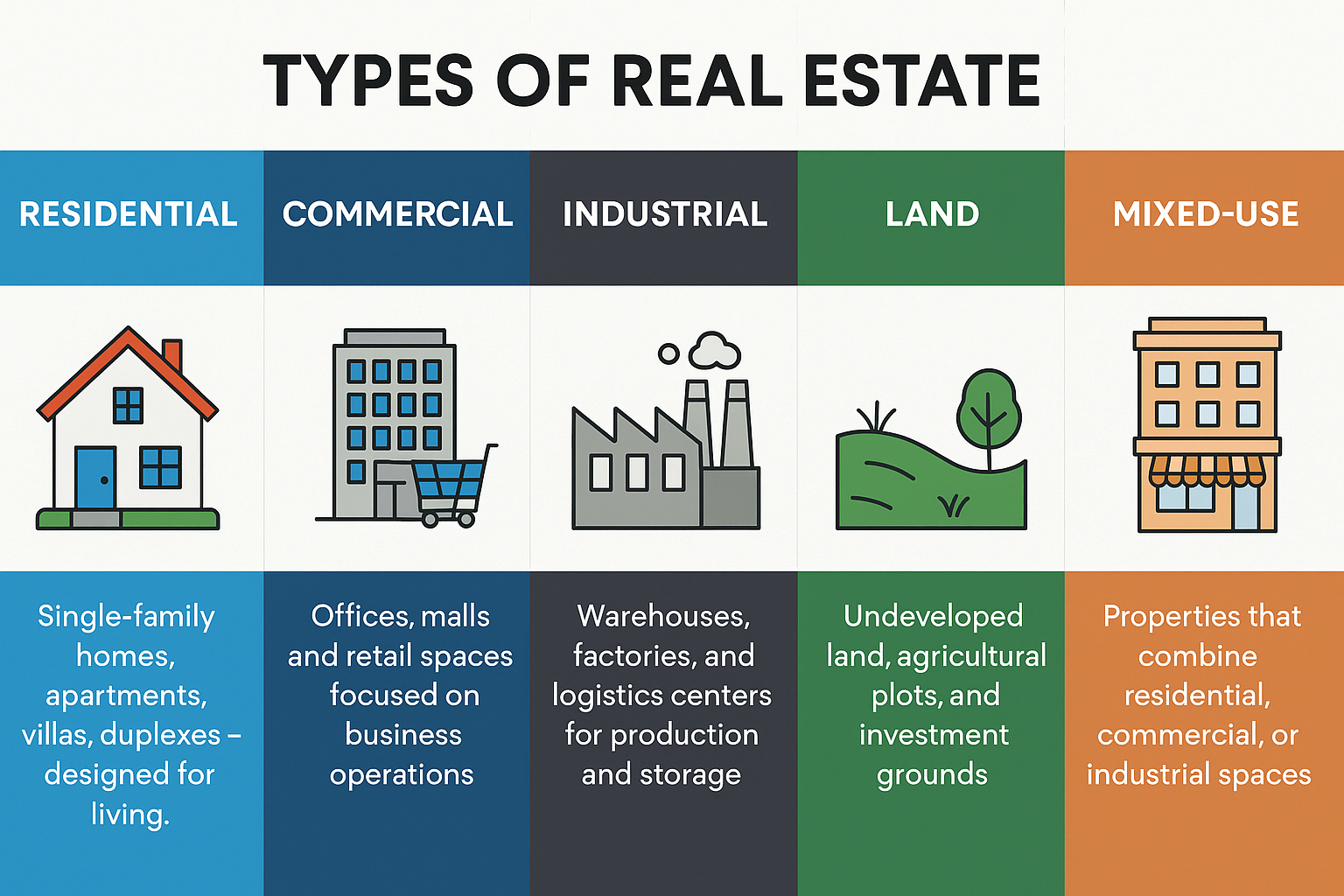
When people explore what is real estate, they usually come across four major types:
Residential
Used for living purposes like flats, villas, and builder floors.
Commercial
Includes office spaces, retail shops, and business complexes.
Industrial
Warehouses, factories, and logistics hubs fall into this category.
Land or Plots
Empty land that can be used for construction or held for appreciation.
Why People Invest in Real Estate
Real estate continues to attract investors for several reasons:
Stable Returns
Property values generally increase over time, especially in growing cities.
Rental Income
Owning property allows you to earn monthly income through rent.
Tangible Asset
Unlike digital investments, this is something you can physically own.
Financial Security
It provides long-term stability and can be passed on as an asset.
How the Real Estate Market Works
Once you understand what is real estate, the next step is knowing how the market functions.
- Buyers purchase property for personal use or investment
- Sellers list their property based on market value
- Agents or consultants help in closing deals
- Banks provide home loans for financing
- Government authorities handle registration and legal approvals
The entire process involves planning, documentation, and careful evaluation.
Steps to Buy Property
If you are planning to enter the market, follow these steps
1. Define Your Purpose
Decide whether you are buying for living, renting, or investment.
2. Choose the Right Location
Location affects price, demand, and future value.
3. Check Your Budget
Include all costs like registration, taxes, and maintenance.
4. Verify Documents
Ensure the property has clear legal titles and approvals.
5. Finalize and Register
Complete the deal with proper documentation and registration.
Selling Property the Right Way
Selling is just as important as buying. Here’s how to do it smartly:
- Set a realistic price based on market trends
- Keep all documents ready
- Improve presentation of the property
- Work with experienced consultants
- Be open to negotiation
A well-planned approach helps you get better value.
Real Estate as an Investment Option
Many people exploring what is real estate are actually interested in investment opportunities. Property investment can be done in different ways:
Long-Term Holding
Buy and hold for several years to benefit from price appreciation.
Rental Investment
Earn steady income by renting out property.
Flipping
Buy at a lower price and sell after improvement for profit.
Commercial Investment
Higher returns but requires larger capital.
Advantages of Property Investment
- Consistent growth over time
- Protection against inflation
- Multiple income opportunities
- Low risk compared to some other investments
This makes real estate a preferred choice for both new and experienced investors.
Challenges You Should Be Aware Of
Even though the benefits are strong, there are some challenges:
- High initial investment
- Legal complications if not checked properly
- Market slowdown in certain phases
- Selling may take time
Being aware of these helps you make smarter decisions.
Real Estate Trends in India
The Indian property market has seen major growth in recent years. Rapid urban development, better infrastructure, and increasing demand for housing have driven this growth.
Cities like Gurgaon, Noida, and Pune are attracting both buyers and investors due to strong connectivity and job opportunities. With government policies and digital processes improving transparency, the sector is becoming more organized.
Steps in Buying Property
| Step No. | Process | Description |
|---|---|---|
| 1 | Research | Identify location and budget |
| 2 | Shortlisting | Select suitable properties |
| 3 | Site Visit | Physically inspect property |
| 4 | Documentation Check | Verify legal papers |
| 5 | Final Purchase | Payment and registration |
Tips for First-Time Buyers
If you are new to this space, keep these points in mind:
- Do proper market research
- Never rush into a deal
- Visit the property personally
- Check loan eligibility in advance
- Take professional advice when needed
These small steps can make a big difference.
Difference Between Real Estate and Property
Many people use these terms interchangeably, but there is a slight difference. Real estate refers specifically to land and anything permanently attached to it. Property is a broader term that can include movable assets as well.
Understanding this difference helps avoid confusion while dealing with legal or financial matters.
Real Estate vs Other Investment Options
When comparing real estate with stocks or gold, the biggest advantage is stability. Property values usually don’t fluctuate as quickly as the stock market.
While stocks offer quick gains, real estate provides steady growth and long-term security, making it ideal for conservative investors.
Home Buying Cost Breakdown
| Cost Component | Approx % of Total Cost |
|---|---|
| Property Price | 80–85% |
| Registration | 5–7% |
| Stamp Duty | 5–6% |
| Maintenance Charges | 1–3% |
Importance of Location in Property Buying
Location plays a key role in determining property value. A good location offers better connectivity, infrastructure, and future development.
Properties near highways, metro stations, schools, and business hubs tend to appreciate faster and attract better rental income.
Legal Documents Required in Real Estate
Before finalizing any deal, document verification is very important. Some key documents include:
- Sale deed
- Title deed
- Occupancy certificate
- RERA registration
- Property tax receipts
Missing or incorrect documents can lead to serious legal issues.
Residential vs Commercial Property
| Feature | Residential | Commercial |
|---|---|---|
| Investment | Lower | Higher |
| Risk | Low | Medium to High |
| Rental Yield | Moderate | High |
| Demand Stability | High | Depends on market |
Role of Real Estate Agents
A professional agent simplifies the entire process. From finding the right property to negotiating the best deal, they add real value.
They also help in handling paperwork, legal checks, and market insights, saving both time and effort.
Home Loan and Financing Options
Most buyers rely on home loans to purchase property. Banks offer different loan options based on income, credit score, and property value.
Before applying, compare interest rates, EMI plans, and loan tenure to choose the best option.
Residential vs Commercial Investment
Residential properties are easier to manage and require lower investment. Commercial properties, on the other hand, offer higher rental returns but involve higher risk and cost.
Choosing between the two depends on your financial goals and risk capacity.
Key Factors Affecting Property Prices
| Factor | Impact Level | Description |
|---|---|---|
| Location | High | Prime areas have higher value |
| Infrastructure | High | Roads, metro, schools increase price |
| Demand & Supply | Medium | More demand raises prices |
| Builder Reputation | Medium | Trusted builders charge premium |
How to Evaluate Property Value
Property valuation depends on several factors:
- Location
- Property size
- Market demand
- Amenities
- Future development
Comparing similar properties in the same area helps you understand the right price.
Common Mistakes to Avoid in Real Estate
Many buyers make mistakes due to lack of knowledge. Some common ones include:
- Not verifying documents
- Ignoring location importance
- Overstretching budget
- Skipping property inspection
Avoiding these mistakes can save you from financial loss.
Future of Real Estate in India
The future of real estate looks promising with increasing urbanization and infrastructure growth. Smart cities, metro expansion, and digital property transactions are shaping the market.
Demand for both residential and commercial spaces is expected to grow steadily in the coming years.
Types of Real Estate
| Type | Usage Purpose | Investment Level | Returns |
|---|---|---|---|
| Residential | Living | Medium | Moderate |
| Commercial | Business | High | High |
| Industrial | Manufacturing | High | Moderate |
| Land | Development | Varies | High (Long-term) |
Conclusion
Now you have a clear idea of what is real estate and why it plays such an important role in financial growth. Whether you want to buy your first home, sell a property, or invest for future returns, understanding the basics gives you confidence.
Real estate is not just about property. It is about making the right decision at the right time.
If you are planning to take the next step, expert guidance can help you avoid risks and find the best opportunities.
Call 8448848500 to buy, sell, or invest with confidence.ortunities today{1}.
FAQs
Real estate means land and anything permanently built on it, like houses, apartments, or commercial buildings. It also includes the rights of owning, using, and selling that property.
There are four main types: residential (homes and flats), commercial (offices and shops), industrial (factories and warehouses), and land (plots or agricultural land).
Yes, real estate is considered a stable and long-term investment. It offers property value growth, rental income, and financial security compared to many other options.
You should verify the sale deed, title deed, RERA registration, occupancy certificate, and property tax receipts to ensure the property is legally clear.
Start by setting a budget, choosing the right location, researching the market, and consulting a real estate expert. You can begin with residential property or plots based on your financial capacity.